Virtual Reality renders can help with the reliability of train services the railway will be providing
There’s no need to worry about the safety of the maintenance team, as before they go in to fix any issues with the railway, they will be able to take a tour of what the inside looks like using special Virtual Reality goggles. This technique will sometimes prevent them from even having to go to the site to fix the issue.
The predict and prevent technique will allow for parts being replaced when they actually need to be, rather than wasting materials by replacing items routinely.
According to David White, HS2’s digital render replica will have “the ability to prevent failures and replace assets when the system indicates a decline in performance”, as well as a “predictive capability […] to extend an asset’s operational life by months or even years”. This will be great for the environment as it cuts down on waste and the carbon footprint.
Despite the massive help a Virtual Reality replica would be, HS2 will still be one of the most reliable railways in the world without it. According to David, “HS2 will be very safe and reliable”, but new technologies will keep being invented to maintain the skills of employees.
Additionally, the financial and time savings could be game-changing for the project deadline
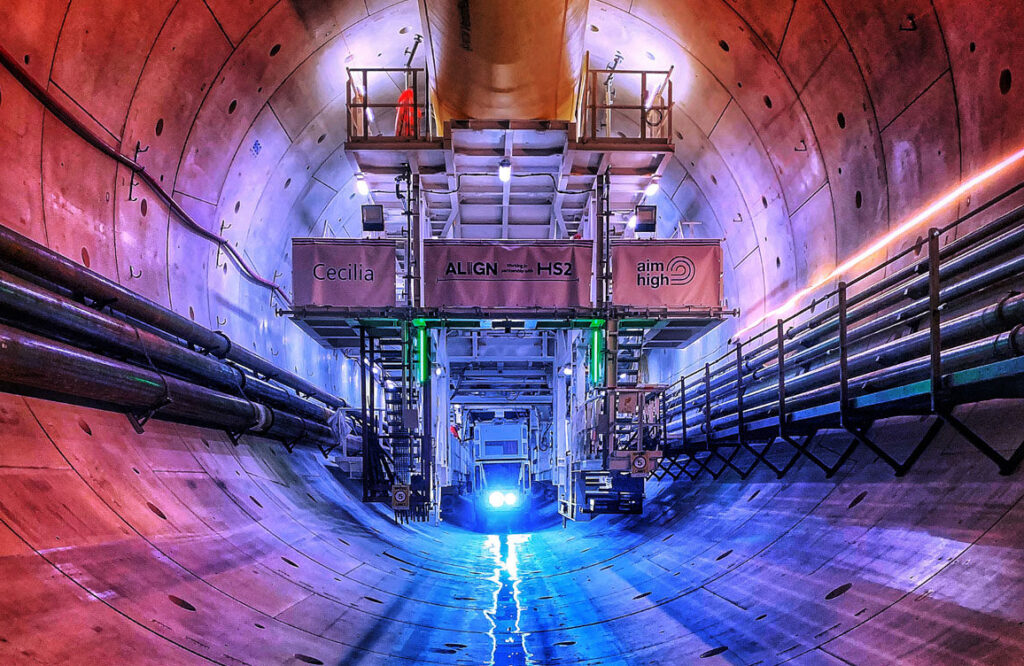
It is estimated that the revolutionary technology has saved 40 days of construction just on phase one of HS2. However, do not let the ground-breaking solutions to old problems fool you into believing that’s all the amazing technology working on the HS2 project. The Bouygues has developed a robot for tunnel boring machines called the Krokodyl, which will carry out tasks such as removing spacers between tunnel segments. Cloud Cycle IoT has also helped with the creation of the tunnels by installing sensors inside of the cement mixers to keep an eye on the quality of the concrete mix, which could save up to 420,000 tonnes of concrete used on phase one of the project. The digital 3D view of the concept design of the railway allowed SCS JV to evaluate BIM models and resolve potential finance errors estimated to save £1 million.