
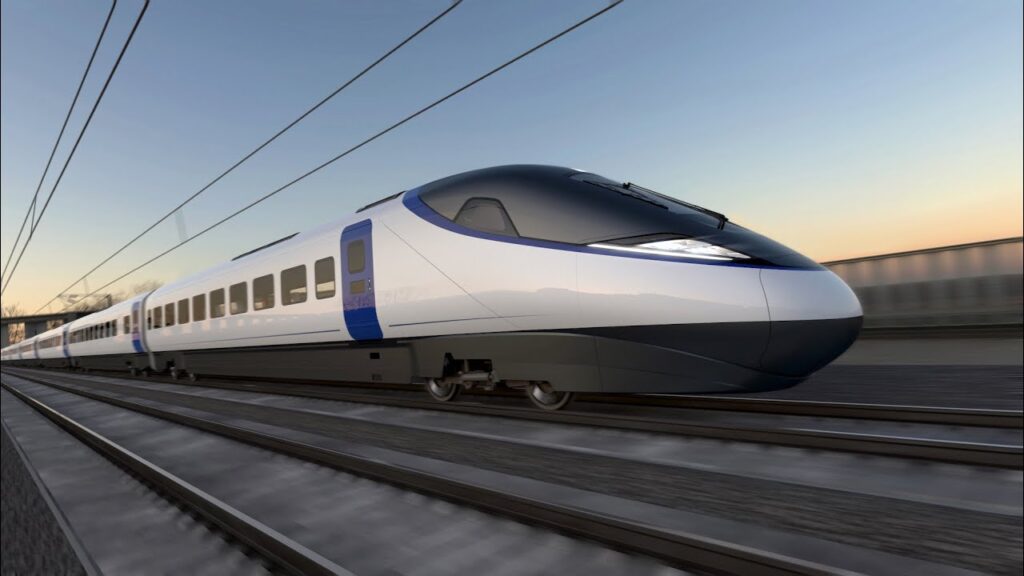
High Speed 2 has finished the first section of their longest tunnel yet. Britain is getting closer to creating the fastest railway connecting London and the West Midlands. But building the backbone of British transport requires innovative building methods.
Two Tunnel Boring Machines mining High Speed 2’s longest tunnel yet, which is scheduled to begin operation between 2029 and 2033, have completed the first section, starting in Chiltern, by reaching the first ventilation shaft. Two machines have been activated in the South Portal as of now
Each TBM is a so-called “underground factory”, which digs the tunnel, concretes the walls, and grouts them as it moves along the tunnel. There will be ten Tunnel Boring Machines working on the HS2 project which overall to build a 64 mile-long high speed railway included twin tunnel connecting London and the West Midlands.. Each TBM is operated by 17 workers. The Tunnel Boring Machines are being supervised by over 100 people working from the surface, who manage the smooth progress of the tunnelling operation as well as the logistics.
TBMs Cecilia and Florence have travelled a total distance of 5.7 kilometres since their launch in summer 2021.. Once completed, this tunnel will be 16 kilometres long, being the longest tunnel of the HS2 project.
Two Tunnel Boring Machines, Cecilia and Florence, have reached Chalfont St Peter. New railway requires modern solutions.
TBMs have now reached the Chalfont St Peter ventilation shaft, which is 78 meters deep. This is the first shaft of five that will ensure proper ventilation and emergency access to the tunnel.
Two of the Tunnel Boring Machines, operated by Align (a collaboration formed of Bouygues Travaux Publics, Sir Robert McAlpine, and VolkerFitzpatrick), are scheduled to dig through to the north portal of the Chiltern tunnels in two and a half years.
TBMs have installed over 20,000 segments, each one weighing around 8.5 tonnes.
TBMs Florence and Cecilia have installed more than 20,000 segments, each one weighing a whopping 8.5 tonnes, which was done during their first tunnelling. Each of the northbound and southbound tunnels will need 56,000 fibre-reinforced, precision engineered concrete wall segments, which are made on-site at the south portal of the tunnel, near the M25.
It is estimated that around 2.7 million cubic metres of debris will be mined during the development of the tunnels. That debris will be used for landscaping near the south portal, helping create around 90 hectares of plain habitats, which will resemble the hills of south east England, considered to be a habitat of international conservation significance. The Chiltern tunnel will lead HS2 beneath the hills, as to ensure the safety of wildlife and minimizing the amount of disruption to communities near the construction site, says David Emms, HS2’ Project Client. Once construction comes to an end, the shaft will be covered by a head-house which will mirror “local farm buildings”, as said by HS2.